Shopify · Agentic commerce · as of 8 Nov 2026

Agentic commerce
for your Shopify store.

When a shopper describes a product to an assistant, the variants, prices and delivery details in your store help determine which listings match. Follow one purchase, then check which products each channel can offer from your store.

From a question about coffee to an order

“I want whole beans for filter coffee, under CZK 400. I like chocolate notes. What can I get delivered to Brno?”

Imagine a shopper asking ChatGPT this question. It can look for coffee by brew method, price and availability. A tasting note attached to the relevant variant gives the assistant another detail to match.

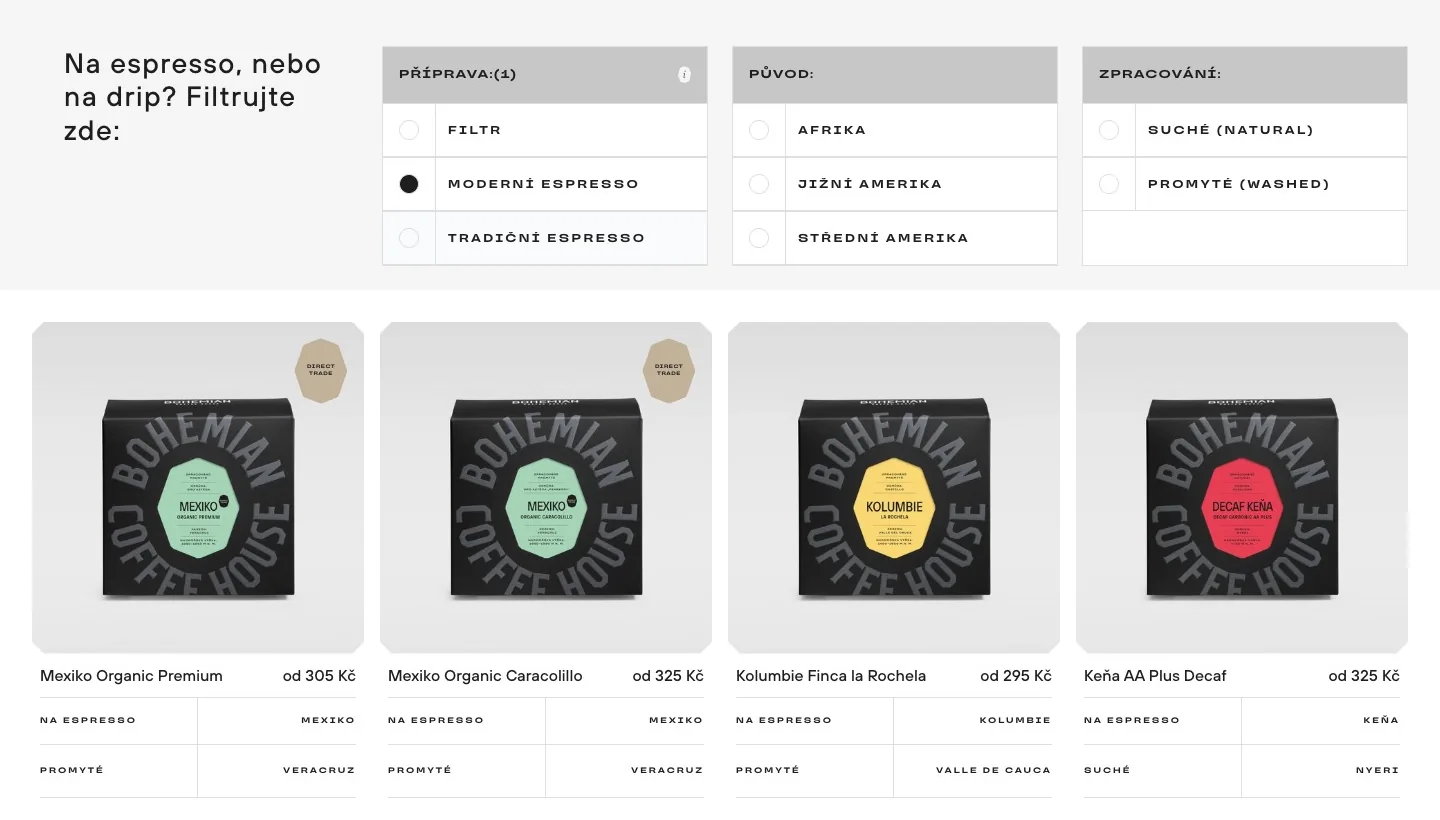
Coffee filters on the roaster’s storefront
Choosing the coffeeA shopper uses filters on the website. The assistant needs those same attributes in the product data.
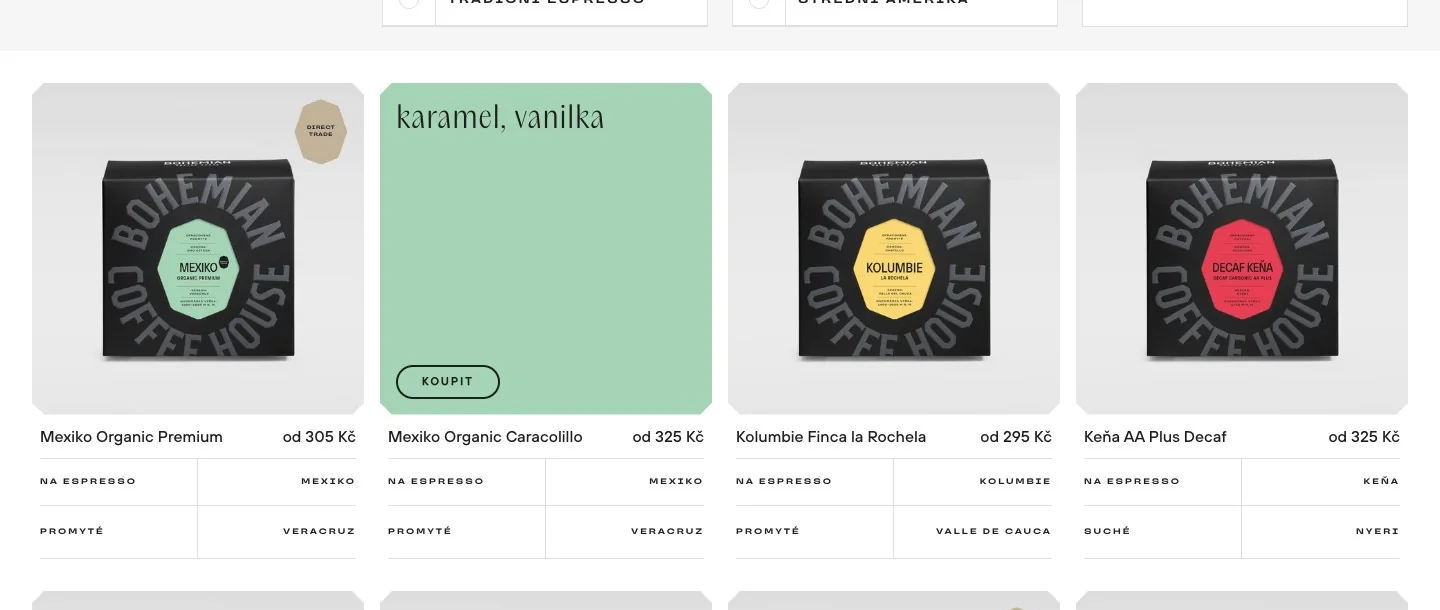
Tasting notes on a coffee product page
Choosing a packIf the 250 g pack matches the budget, the link should lead to the right coffee and the price should match that pack.

In this example the shopper opens the listing from ChatGPT, checks the delivery charge and pays at the store’s checkout. The roaster then sees the purchase under Orders in Shopify. On a channel that supports direct checkout for that store and country, the shopper can confirm the purchase within the assistant instead.

Illustrative purchase. Storefront images from the Bohemian Coffee House project. How shopping through ChatGPT works

Three checks for this week

  1. 01

    Try one real customer query

    Open Search preview under Sales channels → Agentic. If the right pack is missing, check the weight, variant and brew method in Review product data mapping.

  2. 02

    Check the offer as a buyer

    Compare the variant price and stock with checkout. Enter a delivery address to check shipping. Make sure the returns policy and Knowledge Base give the shopper the same instructions.

  3. 03

    Check one channel

    Open a channel your customers use in Agentic. It may already be active for an eligible store. Check product access and where checkout takes place. For Google, also check Merchant Center.

Fees, reporting and Czech consumer guidance checked on 11 November 2026.

What do Catalog and the Agentic plan cost?

If your store runs on Shopify, start with your existing plan. Eligible products enter Catalog automatically. For a shop on another platform, Shopify offers the separate Agentic plan with no monthly subscription. Shopify lists no per-product listing fee for this plan. Direct checkout can incur payment processing or third-party transaction fees. Paid apps and services carry their own charges. Shopify plan fees

Which policies matter when selling to Czech consumers?

Publish delivery charges and times, return instructions and address, terms of sale, privacy policy and a procedure for faulty goods. For goods bought online, Czech consumers generally have 14 days from receipt to withdraw. Statutory exceptions include goods made to the customer’s specifications. Faulty goods claims follow separate rules. Check that the Knowledge Base gives customers consistent answers. Czech Trade Inspection Authority guidance

How do I identify an order from AI?

In Sales channels → Agentic, select Orders, choose a date range and open the channel name. For an individual order, look for the channel or referring source. Compare online store sessions and orders for the same period. Sales includes both referred purchases and direct checkout. For headless storefronts, Shopify does not yet offer this performance overview. Track referred visits in your own analytics. Shopify performance reports

Full seven-step setup guide
  1. 01

    Start with what Catalog sees

    In Sales channels > Agentic, open Shopify Catalog and Review product data mapping. Each field shows how many products have a value, and a button takes you to the gaps.

  2. 02

    Categories and properties as data

    The most specific Shopify taxonomy category, deciding properties in fields and metafields. “Fragrance-free” must be a value, not a word buried in the description.

  3. 03

    Literal titles and descriptions

    The title says what the product is; the description explains who it’s for and how it differs. No empty phrases and no bulk-generated claims you haven’t verified.

  4. 04

    Variants under one product

    Otherwise agents treat them as different items. Variants kept as separate products (such as light and dark roasts) can be joined with custom variant grouping.

  5. 05

    Nothing only in the theme

    Details shown only in the theme may be missing from Catalog. Move them into fields and metafields and build the title or description from them in the mapping.

  6. 06

    Price, stock and policies

    Live price and availability, compare-at prices in line with the EU 30-day lowest-price rule, complete policies and reviewed Knowledge Base facts.

  7. 07

    Test and measure

    Search preview with real customer queries and the Agentic reports. With Google direct checkout pixels don’t fire, so compare orders in the admin.

None of this guarantees that a particular AI recommends you: each channel decides its own ranking and presentation. Good data does improve the chance that your offer is understood correctly, and it helps filters and search on your own site too.

The full guide with examples and a checklist

How AI shopping works

Catalog helps the assistant find a product. The sales channel determines where the shopper can pay. Explore each part to see what you can configure in Shopify and what a developer can build.

Data

Shopify Catalog

Available

A shopper looking for coffee can search several merchants through Global Catalog, or just one roaster through Storefront Catalog. A result can include the available pack sizes and their prices. Google uses Merchant Center for product discovery.

Concerns you directly. Your store’s data goes into Catalog; Fall ’26 added an eligibility check that shows what to fix.

Shopify Help Center: Agentic storefronts · Shopify Editions Fall ’26

Global Catalog · Storefront Catalog · Google Merchant Center

Channels

Agentic Storefronts

Available, subject to channel requirements

The part of the Shopify admin (Sales channels > Agentic) where you decide which AI channels get your data and direct checkout.

For eligible stores, everything available is switched on by default. The separate Agentic plan starts with direct checkout disabled. Neither eligibility nor activation guarantees a recommendation.

Shopify Help Center: Agentic storefronts

Commerce rules

UCP

Open standard

Universal Commerce Protocol defines commerce capabilities for catalogues, carts, checkout and orders. It supports REST, MCP, A2A and embedded transports and bindings; participants negotiate the tools and versions they support.

Indirectly. Shopify implements it for you; a custom agent or app works with it.

Universal Commerce Protocol · Shopify.dev: Agentic commerce

Browser

WebMCP

Experiment (origin trial)

A proposed web standard that lets a page offer tools to an agent in the browser, instead of the agent clicking blindly.

Chrome documents an origin trial from version 149. Shopify introduced checkout tools on 28 Sep 2026, but use requires a compatible browser, agent and implementation. This remains an experimental web API, not a generally available sales channel.

Chrome for Developers, 9 Jun 2026: WebMCP origin trial · Shopify.dev Changelog, 28 Sep 2026: WebMCP for checkout

Interface

Ask MCP

UCP 2026-08-25

ask_business answers questions about policies and services using the store’s Knowledge Base and policies. It changes neither carts nor orders or returns. The agent profile must declare UCP 2026-08-25 or draft and dev.ucp.common.ask, and the merchant must actually offer the tool.

Ask MCP · Knowledge Base

Interface

Order MCP

Restricted access

get_order reads only orders placed through this agent. It requires Token tier, a Global API JWT with read_global_api_orders, the declared capability and Shopify-Buyer-IP on merchant calls. It is not a buyer’s universal order history. Webhooks are the primary update channel; Shopify registers their URL and topics through a partner manager, rather than a self-service API or a webhook_url in the profile alone.

Order MCP · Auth tiers · Order webhooks

Interface

Shop / Shop MCP

Two distinct products

Shop is a consumer app and website, with Catalog products and its own selling settings. Shop MCP is a hosted interface for personal agents at mcp.shop.com. Search needs no API key; Shop sign-in enables personal features and authorised Shop Pay purchases. search_orders supports a signed-in shopper’s orders and tracking; get_checkout checks a particular checkout. Shop MCP has no webhooks yet. For Order MCP, by contrast, they are the main source of changes.

Shop in Agentic · Selling on Shop · Shop MCP · 13 Oct 2026

A glossary for merchants and developers

Merchants manage listings, policies and channels. Developers use MCP and UCP when building a custom assistant.

Agentic plan
A plan for selling through AI while running your shop on another platform.
Knowledge Base
Store answers to questions about topics such as delivery and returns.
Storefront Catalog / Global Catalog
Storefront searches one shop. Global searches across merchants.
MCP
A protocol that lets an assistant use a tool, such as product search.
UCP
A standard for exchanging shopping information between an agent and a store.
WebMCP
An experimental way for a website to offer tools to an agent in the browser.
Shop MCP
Connects a personal assistant to Shop and supports buyer-authorised purchases with Shop Pay.
Ask MCP
Lets an agent ask the store a question, such as who pays for return shipping.
Availability

Where it
works today.

App availability, product discovery, merchant participation and direct checkout are four separate decisions. This table separates them, including the business location and the shopper’s country.

Channel App access in Czechia Discovery / data Merchant participation Direct checkout Practical impact for Czechia / EU
ChatGPT Yes; app access does not guarantee shopping features. Shopify Catalog, alongside independent web discovery. The store must sell to the US, with eligible products and required policies. It may be based elsewhere. Not offered by this Shopify integration; the shopper goes to the store. Czech users are not generally excluded from finding websites. This channel’s merchant integration still requires selling to the US.
Microsoft Copilot Available, with Czech support. Shopify Catalog; recommendations depend on the experience. Direct checkout requires US sales, Catalog eligibility, terms and policies. US customers only; disabled direct checkout falls back to the store. The checkout restriction is not a product-discovery ban. Do not assume in-Copilot payment in Czechia.
Google AI Mode / Gemini Both services are available in Czechia and support Czech. Google Merchant Center, via Google & YouTube or another feed. Direct checkout requires sales to the US, Canada or Australia, Merchant Center, Catalog eligibility and policies. US, Canada and Australia, with a gradual rollout. Other shoppers can be referred to the store. A restriction on direct payment does not rule out Czech product discovery or website referrals.
Meta / Muse Meta AI is in Europe; that does not establish every Muse feature or Czech shopping availability. Shopify Catalog; shoppable ads also require the synced Facebook & Instagram channel. Direct checkout requires selling to at least one of the 11 supported countries, Catalog eligibility and policies. Australia, Brazil, Canada, India, Japan, Mexico, New Zealand, Singapore, South Korea, UK and US. Czechia is outside direct checkout. I have not yet been able to confirm whether product discovery works in Czechia.
Shop The app is available to Czech customers, including Czech; also on shop.com. Shopify Catalog and Shop’s shopping assistant. Not Shop MCP. Catalog eligibility plus separate Shop merchant rules. Direct sales depend on product publication and the Shop selling method. For products published for direct selling in Shop; otherwise a Purchase at link to the store. A relevant channel for Czech shoppers. A specific purchase depends on the product, delivery to Czechia and payment options.
Personal agent · Shop MCP An interface, not a separate app. Catalog search over MCP; personal features after Shop sign-in. A compatible agent and supported merchant / checkout. Shop Pay after sign-in and buyer approval; availability is transaction-specific. Nobody guarantees payment through any agent across the whole EU yet.
Browser agent WebMCP is an experimental API, not an app or sales channel. The storefront, optionally with separately connected MCP tools. A compatible agent, browser and checkout exposing the tools. In the open checkout after buyer confirmation; payment challenges return to the buyer. No general support guarantee. Chrome documents an origin trial from version 149.

ChatGPT app · Copilot languages · AI Mode · Gemini · Meta AI Europe · Shop · Czech App Store · Shop merchant rules

Copilot, Google and Meta direct checkouts have additional product and feature limits. Subscription-only products, bundles, customisable and B2B-only products are examples; a product with a one-time purchase option is a different case. Check the individual channel rules. Disabling Catalog access does not automatically block web indexing or disable Shop.

What’s new

The last
two months.

Changes from 7 September to 7 November 2026, from the official changelogs and the Shopify Editions page.

  1. Meta as an AI channel

    Meta appeared among the AI channels in the admin. Products are shared with it through Shopify Catalog by default. Shopify Changelog, 8 Sep 2026: Meta as an AI channel

  2. WebMCP in checkout

    Browser agents can read and fill in checkout in the open tab. They submit the order only after the buyer confirms, and the merchant sets nothing up. Shopify.dev Changelog, 28 Sep 2026: WebMCP for checkout

  3. Compare-at prices for agents

    Shopify Catalog shares compare-at prices with AI agents. On by default for most stores, and it can be turned off. Shopify Changelog, 9 Oct 2026: compare-at prices for agentic channels

  4. Shop MCP

    A hosted server at mcp.shop.com: one connection for Catalog search, cart and Shop Pay checkout. For developers of agents and apps. Shopify.dev Changelog, 13 Oct 2026: Shop MCP

  5. Knowledge base and eligibility check

    Merchants approve the facts agents repeat about the store and can see why products aren’t in Catalog. UCP adds /buy; the Ask interface for store questions supports UCP 2026-08-25 and draft. Shopify Editions Fall ’26

Details for store admins

For those who do the setup themselves: eligibility, discovery files, Knowledge Base, mapping, measurement and pricing.

Eligibility: the store and the product are separate

For an ordinary store, Catalog requires Starter or higher and a public storefront. The separate Agentic plan is an exception that permits inclusion without a published Shopify storefront, with external product URLs. Plus is not required.

  • Account: verified email, two-step authentication, a passkey where available, and identity / business verification when requested. Genuine sales history, prompt fulfilment, low chargebacks, paid invoices and good account standing matter. Shopify publishes no universal minimum order count or numerical chargeback threshold.
  • Product: a title, at least one image, a price above zero, an identifiable URL and publication to Online Store, Hydrogen or Headless. It must not be Unlisted, hidden from search engines or in a prohibited category. Complete descriptions and available variants improve quality; minimum eligibility does not guarantee recommendations.

Catalog requirements

agents.md, llms.txt and llms-full.txt

Shopify generates these automatically. /agents.md is the canonical discovery URL; /llms.txt and /llms-full.txt serve compatible crawler conventions and return the same content by default: store name and URL, sitemap, policies and discovery endpoints.

The agents.md.liquid template changes the default content of all three URLs. llms.txt.liquid and llms-full.txt.liquid take precedence for their specific URL. These files replace neither Shopify Catalog nor a product feed or channel integration.

Agent discovery files

Knowledge Base: publish public information only

Manage it in Sales channels > Agentic > Sources > Knowledge Base. Published facts are publicly available through Storefront MCP. Facts from storefront scans start unpublished; facts linked to the admin, such as policies and contacts, are published when created. You can publish or unpublish individual fields, categories or all facts and approve suggested updates.

The limit is 1,000 facts in total. The legacy Knowledge Base app is no longer available to install; its documented deprecation date is 15 Jan 2027. With up to 1,000 facts, custom facts and overrides transfer and publish automatically; larger sets need manual review and completion.

Do not add internal information, private price lists, credentials or sensitive business or customer data.

Knowledge Base · Legacy app migration

Metafields and variant grouping

In Review product data mapping, select Shopify Catalog and check the supported title and description sources. You can use product fields, metafields or combined sources. Missing values fall back to the default source. Product category cannot be mapped for Shopify Catalog here.

Custom variant grouping combines separate products into a listing using supported fields, metafields, titles or tags. The preview checks data received by Catalog, not its exact presentation in every AI app. An arbitrary custom metafield does not automatically become a searchable attribute or filter for all agents.

Catalog data mapping · Catalog tools

Search Preview and measurement

Open Sales channels > Agentic and Search preview. Try realistic buyer queries: product type, intended use, attributes, dimensions or availability. Review returned products and quality checks for descriptions, images, variants, reviews and policies. Fix missing data or mapping and repeat the query.

This is raw Shopify Catalog search output, not a guarantee of ranking in ChatGPT, Google or another app. Each channel selects and presents products independently. Agentic reports distinguish sales, orders and sessions; the documentation currently says Agentic performance analytics are unavailable for headless stores.

Search Preview and analytics

Prices, compare_at_price and the Czech 30-day rule

price is the current selling price; compare_at_price is a comparison price, not proof of a previous price or a legally valid discount. Catalog mapping lets you choose Price or Compare-at price as list price; the latter applies only when higher than the current price. AI channels may use it for strikethrough pricing.

When announcing a discount to Czech consumers, § 12a of Act No. 634/1992 requires the lowest price in the preceding 30 days and a discount calculated from it. For newer products, use the lowest price since sales began; for continuous progressively increased discounts, the reference precedes the first reduction. The exception for rapidly perishable goods or short shelf life does not exempt all food.

Passing a comparison price to an AI channel replaces neither price history nor correct discount presentation or legal compliance.

List price settings · ČOI · § 12a · EU Price Indication Directive · Art. 6a

How I help

Where I can
step in.

I’m a Shopify developer. I can help with the technical and data side; I don’t promise guaranteed visibility in AI channels, because nobody can.

Readiness audit

I go through store eligibility, the Agentic settings, policies and product data, and write down what to change and in what order.

Ask for an audit

Product data and metafields

I design and implement product data for the storefront and supported Catalog fields, checking which search attributes the integration actually supports.

Describe your catalog

Theme and checkout

I check custom code, extensions and apps that can get in a browser agent’s way, and fix them.

Describe your store

A custom agent or app

For projects that want their own shopping assistant on Storefront Catalog or Shop MCP: design, prototype and integration.

Discuss the brief
Frequently asked questions

Common
questions.

Do I need to switch anything on for Shopify agentic commerce?

For an ordinary eligible store, available Agentic Storefronts options are active by default. Check Catalog, channels and checkout in Sales channels > Agentic; the separate Agentic plan starts with direct checkout disabled. Shop has its own settings, and this Shopify ChatGPT integration does not offer direct checkout.

Can customers in Czechia shop this way?

Yes, for example through Shop or a referral to the merchant’s checkout. AI Mode and Gemini are available in Czechia and in Czech. App access, product recommendations and direct checkout have different requirements; availability of one does not establish the others.

Do I need Shopify Plus?

No. Ordinary Shopify Catalog eligibility starts at Starter; the separate Agentic plan has its own conditions. The store, account, products and channel must meet their requirements. A subscription plan alone guarantees neither inclusion nor recommendations.

What is the difference between MCP, UCP and WebMCP?

MCP connects AI to tools and data. UCP defines commerce capabilities and multiple transports, including MCP. WebMCP exposes tools in the browser and Chrome still documents it as an origin trial. Ask MCP supports UCP 2026-08-25 and draft.

Is Shop the same as Shop MCP?

No. Shop is a consumer shopping app and website. Shop MCP is an interface for personal agents, with catalogues, carts, checkout and signed-in order search. Its capabilities differ from Order MCP, which reads only orders placed through that particular agent.

Will better data guarantee higher sales?

No. Complete data helps channels interpret an offer, but each channel selects and ranks products independently. Search Preview checks Shopify Catalog output; it guarantees neither actual placement nor commercial results.

Sources

Documentation
and specifications.

Documentation checked on 8 Nov 2026. A date in an announcement title is its publication date; the verification date is separate. Rollouts and draft specifications can change.

Next step

Want to know where
your store stands?

Send me the store address and the markets you sell to. I’ll tell you which parts of agentic commerce concern you today, what is worth changing and what can wait.